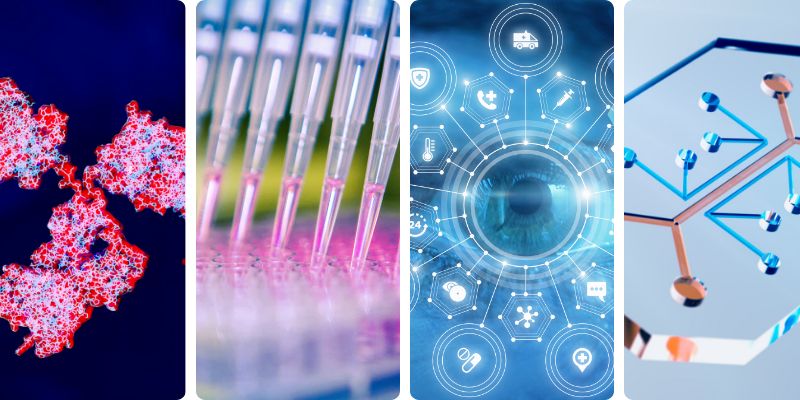
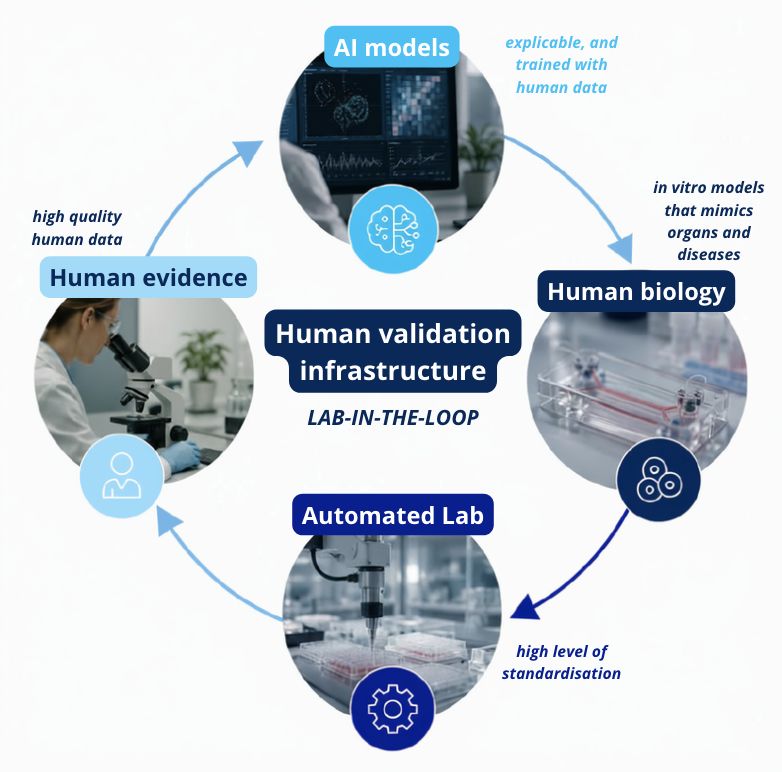
At Anivance, AI is not a layer on top of the biology; it is part of how the biology is produced. We describe this as physical AI for human biology: AI informs how we design our organ-on-chip experiments, how our automated platforms run them, and how the resulting human-relevant data is interpreted.
Dr Guan-Yu Chen
AI, Human Biology and Regulatory Trust: Towards a Human Validation Infrastructure
SES122 – September 2026
Artificial intelligence is significantly transforming drug discovery. However, its true value depends on the quality of the biological data fueling it. For Dr. Guan-Yu Chen, founder and CEO of Anivance AI, the future of biomedical research lies in the convergence of artificial intelligence, organs-on-chips, automation, and human biology. In this interview, he introduces the concept of “Human Validation Infrastructure” — an approach aimed at generating standardized, reproducible, and actionable human data to improve predictive toxicology, boost regulatory confidence, and accelerate the development of therapies that are safer and more relevant to humans.
From engineering to human-relevant innovation
Pro Anima Scientific Committee: Anivance AI combines organ-on-chip (OOC) technologies with artificial intelligence (AI) to improve drug development and disease modeling. Can you tell us a bit more about your personal journey and the history of Anivance AI, what originally motivated you to build the company around this convergence of microphysiological systems and AI, and what unmet need you were trying to address?
Dr Guan-Yu Chen: I have never seen engineering and biology as separate disciplines. Throughout my career, I have believed that engineering can fundamentally transform how we understand human biology and develop new medicines.
A defining moment came during my postdoctoral training at MIT. In the winter of 2014, Boston was paralyzed by one of its largest snowstorms. As I walked through the snow to attend an animal research certification course, I found myself asking a simple question: Could we one day understand human biology without relying so heavily on animal experiments? That question became the starting point of a journey that has shaped my career ever since.
When I returned to Taiwan and joined academia, I began developing OOC technologies to recreate human physiology in vitro. At the time, the field was still emerging, but I believed engineering principles could make biological research more standardized, reproducible, and ultimately more predictive of human outcomes.
Several years later, another technological revolution emerged. Artificial intelligence was transforming drug discovery by generating hypotheses and identifying promising drug candidates faster than ever before. At the same time, I began to see a new bottleneck: AI could generate hypotheses faster than biology could validate them. This reinforced a principle that still guides us today: AI is only as good as the human evidence behind it.
This realization led to the founding of Anivance AI. We did not establish the company simply to build better organ-on-chip models or AI tools. Our focus is the point where AI predictions meet human biology—using human-relevant models to create stronger evidence for drug-development decisions.
Today, we see human-relevant models as the biological foundation of the AI era. Every experiment can generate standardized human data that informs future analysis, creating a continuous learning cycle between biology and artificial intelligence.
Ultimately, our goal is larger than replacing animal testing. We are building what we describe as a Human Validation Infrastructure—a foundation that makes reliable human evidence more scalable, reproducible, and useful for decisions throughout drug development. We believe this infrastructure will be essential to a more predictive, human-centered future in medicine.
AI and organ-on-chip: Beyond automation
Pro Anima Scientific Committee: Many companies today use AI for data analysis, but your approach goes even further. How does AI concretely enhance the value of OOC models? What could be the impact in areas such as toxicity prediction, disease modeling, or therapeutic discovery?
Dr Guan-Yu Chen: Most companies in this field use AI as an external analytical layer—a model that sits on top of finished experiments to look for patterns. At Anivance, AI is not a layer on top of the biology; it is part of how the biology is produced. We describe this as physical AI for human biology: AI informs how we design our organ-on-chip experiments, how our automated platforms run them, and how the resulting human-relevant data is interpreted. Because design, execution, and interpretation belong to one system rather than three disconnected steps, the data we generate is more consistent and more meaningful than results assembled from fragmented workflows.
This matters because conventional organ-on-chip work is often low-throughput and hand-crafted, which makes it difficult for any AI to learn from reliably. By standardizing and automating how our experiments are run, we produce human data with the consistency that makes AI genuinely useful. In our approach, biology and AI reinforce each other rather than working in isolation: stronger human evidence makes the AI more trustworthy, and that trustworthiness is what makes the biology valuable for real decisions.
The impact becomes concrete in the areas your question raises. In toxicity prediction and drug-response profiling, AI extracts biologically meaningful patterns from the continuous, high-dimensional signals our platforms generate, converting complex biological responses into quantitative features that capture dynamic treatment effects rather than a handful of static endpoints. In our current focus on respiratory and inhalation toxicology, this can mean recognizing human-relevant safety signals earlier and with greater confidence than fixed endpoints allow.
In disease modeling and early drug discovery, AI helps identify patterns across heterogeneous patient responses and integrate diverse sources of biological evidence, surfacing relationships that are difficult to detect through conventional analysis. This supports patient stratification and a more systematic prioritization of promising candidates, while letting the relevant biology emerge from the data rather than from predefined assumptions.
None of this means handing judgment to an algorithm. AI and human-relevant biology work together: AI helps interpret the evidence, and the human biology keeps that interpretation honest. This is what we mean by Human Validation Infrastructure—because AI is only as good as the human evidence behind it, our focus is on building the system that produces trustworthy human evidence, and letting AI add its value on top of that foundation.
Predictive toxicology and the future of preclinical assessment
Pro Anima Scientific Committee: Anivance AI was selected by the Foundation for the National Institutes of Health (FNIH), which aims to help advance New Approach Methodologies (NAMs) through the Validation and Qualification Network (VQN) to modernize drug safety assessment. What does this recognition represent for your company, and what kind of impact could we hope for with the integration of NAM platforms in preclinical toxicology over the next decade?
Dr Guan-Yu Chen: Our approach has been recognized through both the PETA Asia Award and our selection to participate in the FNIH VQN Pilot Program. Together, these milestones reflect the growing global momentum toward human-relevant and animal-free approaches in toxicology. For us, these recognitions are less about institutional acknowledgement and more about the increasing confidence that human-relevant evidence will play a central role in the future of preclinical safety assessment.
Participating in the FNIH VQN is an important milestone because it allows us to contribute to a collaborative effort involving regulators, industry, academia, and technology developers working toward a common goal: generating the robust scientific evidence needed to support NAMs. Rather than representing regulatory approval, participation in the VQN provides an opportunity to strengthen the scientific foundation of our platform while contributing to standardized approaches for evaluating human-relevant testing systems. Because our platforms are automated and standardized by design, they are well suited to generating the reproducible, comparable evidence that such validation efforts depend on. This is central to our concept of Human Validation Infrastructure: the value lies not only in developing a model, but in building confidence that its evidence can support real decisions.
Looking ahead, we believe that international regulatory collaboration will be essential to advancing predictive toxicology. We are encouraged by the growing collaboration among organizations such as the EMA, FDA, OECD, EURL ECVAM, FNIH, and the wider NAMs community. Early scientific dialogue, shared validation efforts, and harmonized scientific standards will be critical for aligning technology development with regulatory needs and building confidence in human-relevant evidence for future regulatory decision-making.
More broadly, we believe the future of predictive toxicology is not defined by whether we use animals or not; it is defined by how confidently we can predict human biology. Future preclinical assessment will increasingly rely on a weight-of-evidence framework that integrates complementary data from organ-on-chip systems, advanced in vitro models, computational approaches, and, where appropriate, animal studies.
Rather than asking whether a single NAM can replace an animal model, the more important question is how multiple complementary NAMs can collectively provide stronger, more mechanistic, and more human-relevant evidence for regulatory decision-making. By revealing human-specific responses that conventional animal models may not always capture, these technologies have the potential to improve the prediction of human safety, identify toxicity signals earlier in drug development, and support more informed regulatory decisions.
Although our current work focuses on human-relevant respiratory models for inhalation toxicology, we see this as one example of a much broader transformation occurring across the life sciences. Whether the application is respiratory, liver, kidney, or other organ systems, the common challenge is to establish robust, reproducible, and regulatory-relevant evidence that enables confidence in NAMs. As scientific confidence continues to grow through rigorous validation, reproducibility, and international collaboration, we expect NAMs to progressively reduce and, for well-defined contexts of use where sufficient evidence has been established, eventually replace animal testing where scientifically appropriate. Ultimately, we believe the future of predictive toxicology will be driven not only by technological innovation, but also by global collaboration, shared scientific standards, and a common commitment to delivering more predictive science, reducing animal use, and improving outcomes for patients.
By standardizing and automating how experiments are run, working toward common benchmarks, and keeping our AI anchored to experimental evidence at every step, we aim to make organ-on-chip data reliable enough to build regulatory confidence on. That is what we mean by Human Validation Infrastructure.

Data quality, biological complexity and trust in AI-driven NAMs
Pro Anima Scientific Committee: One of the key challenges in combining AI with advanced in vitro systems is ensuring biological relevance, reproducibility, and confidence in the generated data. What do you see today as the main scientific and technical bottlenecks preventing wider adoption of AI-enabled OOC platforms?
Dr Guan-Yu Chen: The wider adoption of AI-enabled OOC platforms as robust, regulator-accepted NAMs is currently hindered by four interrelated scientific and technical bottlenecks across data quality, biological complexity, and AI trust. These are not only individual model problems; they are infrastructure problems involving how evidence is generated, compared, and trusted. This is why we frame the broader challenge as building Human Validation Infrastructure rather than advancing any single platform in isolation.
Data Paucity and Inconsistency at Scale
Machine-learning performance depends on the volume, quality, and uniformity of training data, yet conventional OOC experiments are typically low-throughput and sensitive to variation in cell sources, culture conditions, and handling. When batch-to-batch variability is high, models risk learning operational noise rather than biological signal. Overcoming this requires scalable, standardized experimental workflows capable of generating high-quality datasets with sufficient consistency and scale.
Fragmented Standardization and Lack of Benchmarks
The field remains fragmented, making biological readouts difficult to compare across platforms. Progress depends on shared standards, reference datasets, and consistent data formats that allow objective evaluation.
Poor Inter-Laboratory Transferability and Reproducibility
Industrial adoption also depends on demonstrating reproducibility across laboratories. Cross-site validation is essential to establish confidence in both biological performance and AI predictions.
The AI "Black Box" and Regulatory Trust
Powerful AI models can uncover subtle biological patterns, but regulatory adoption depends on transparency, reliability, and confidence in their predictions. Explainability, continuous validation, and uncertainty estimation will therefore be essential for AI to become a trusted component of regulatory decision-making. In other words, AI must remain anchored to experimental evidence.
Taken together, these are not four separate problems but one: the field lacks a shared infrastructure for generating and trusting human evidence. That is the gap we set out to close. By standardizing and automating how experiments are run, working toward common benchmarks, and keeping our AI anchored to experimental evidence at every step, we aim to make organ-on-chip data reliable enough to build regulatory confidence on. That is what we mean by Human Validation Infrastructure.

Global momentum and regulatory acceptance
Pro Anima Scientific Committee: The regulatory landscape is evolving rapidly in the United States, Europe, and Asia regarding the replacement of animal testing and the integration of NAMs. From your perspective and through your international collaborations, where do you see the strongest momentum today for regulatory acceptance of organ-on-chip and AI-based approaches?
Dr Guan-Yu Chen: From our perspective, the strongest momentum for the regulatory acceptance of OOC and AI-based approaches is no longer limited to a single region. We see significant progress in both the United States and Europe, where regulatory agencies and scientific communities are increasingly focused on the key elements needed for acceptance: clear regulatory pathways, robust validation, standardization, and international collaboration. Perhaps the most important shift is that the conversation is moving beyond whether NAMs should be considered to what evidence is needed for them to support regulatory decision-making. These complementary efforts are strengthening global confidence in human-relevant evidence and accelerating the broader adoption of NAMs.
From Taiwan's perspective, we see growing momentum through scientific capability building and international collaboration. Rather than pursuing rapid regulatory change, Taiwan is strengthening its role by generating scientific evidence, contributing to international collaborations, and aligning with evolving global standards.
We also see growing recognition that AI will be most impactful when integrated with high-quality, human-relevant biological data generated by validated NAM platforms. Its value will depend less on the scale of the algorithm than on the quality of the evidence supporting it. We believe the future of regulatory acceptance will depend not on any single technology, but on the ability of complementary NAMs, including organ-on-chip systems, AI, and advanced in vitro models, to generate reliable, reproducible, and human-relevant evidence within a weight-of-evidence framework. This is the role we envision for Human Validation Infrastructure: enabling different technologies to contribute evidence that can be compared and trusted. As confidence in these approaches grows, they will play an increasingly important role in improving the prediction of human safety and supporting regulatory decision-making.
Personal perspective(s) for the future
Pro Anima Scientific Committee: What continues to motivate you personally in advancing human-relevant science and non-animal innovation?
Dr Guan-Yu Chen: What continues to motivate me is the belief that every important decision in medicine should be guided by the best possible understanding of human biology.
Throughout my career, I have seen remarkable advances in engineering, biotechnology, and now artificial intelligence. Yet one challenge has remained the same: we still lack scalable, reliable human evidence to support many critical decisions in drug development.
I believe the future of biomedical innovation will not be defined by a single breakthrough technology. It will come from connecting engineering, biology, AI, and clinical science into an integrated ecosystem that learns continuously from human data. That is the long-term idea behind Human Validation Infrastructure.
For me, advancing human-relevant science is not only about reducing animal use. It is about helping researchers make better decisions, accelerating the development of safer therapies, and ultimately improving patients' lives.
We are not building better chips for their own sake; we are building the infrastructure for trustworthy human evidence—the foundation that future medicine can rely on. If our work can help establish human biology as the foundation of future drug development, that will be the most meaningful achievement of my career.

Dr. Guan-Yu Chen is a Professor at National Yang Ming Chiao Tung University (NYCU) and Founder & CEO of Anivance AI.
He leads the development of a Human Data Infrastructure that integrates organ-on-chip systems, automated laboratories, human biology, and artificial intelligence to transform how new medicines are discovered, validated, and developed. Following the completion of its Series A financing, Anivance AI is expanding across Japan, Singapore, and the United States. The company’s vision is to build an AI × Human Biology × Lab-in-the-Loop platform that continuously generates and validates human-relevant data, enabling faster and more reliable decisions throughout the drug development process.