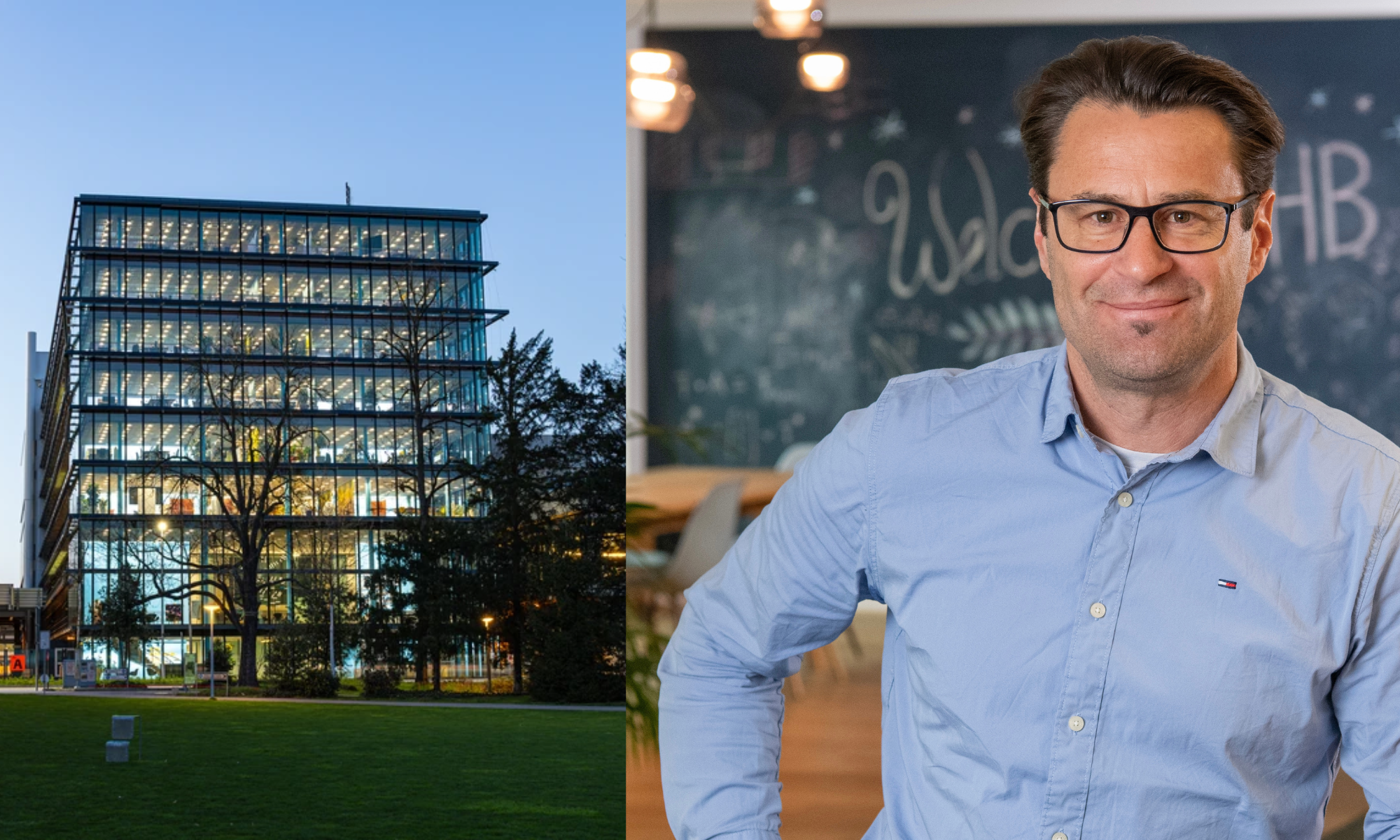
Prof Matthias Lütolf

Prof Matthias Lütolf


On organoids, AI and the future of translational medicine

SES121 – June, 2026

In this in-depth interview, Matthias Lütolf looks back on the scientific milestones that have shaped his career, both in academia and in industry, from his pioneering work on organoids at the École Polytechnique Fédérale de Lausanne to his role as head of the Translational Bioengineering Laboratory at Roche. He explains how engineering principles, automation and AI are transforming organoids into predictive models relevant to humans in the context of drug discovery, whilst addressing the key scientific, industrial and regulatory challenges that still stand in the way of replacing animal testing and accelerating translational medicine.

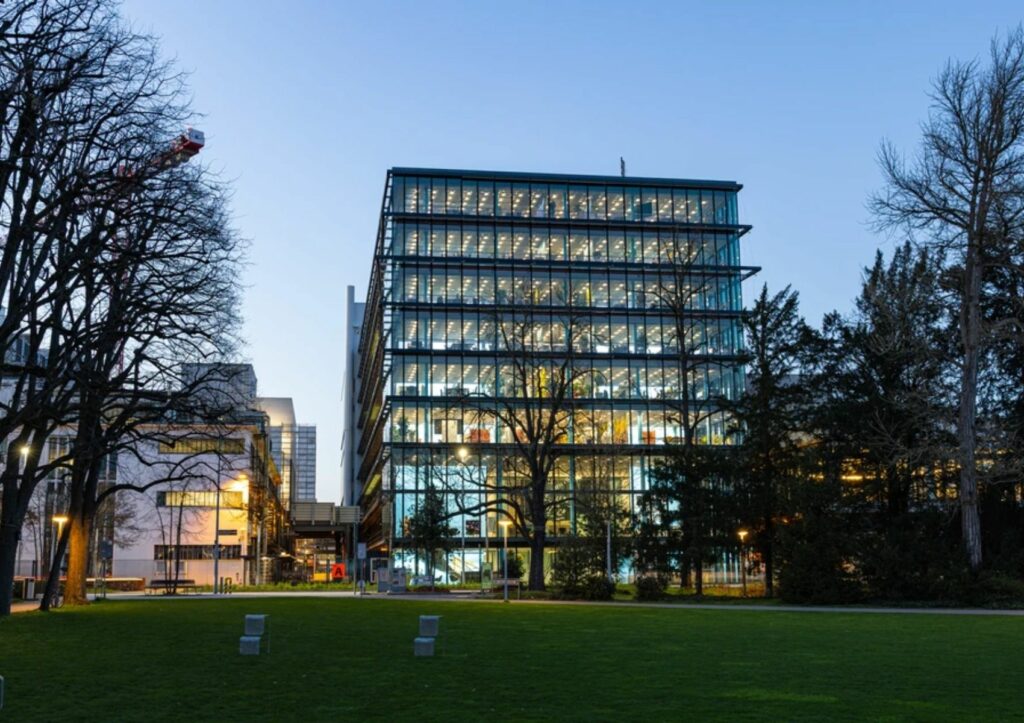
Roche Institute of Human Biology (IHB) ©IHB Roche

Scientific journey and inflection points

Comité scientifique Pro Anima: You’ve built a career at the intersection of materials science, stem cell biology, and bioengineering, spanning academia and industry — from EPFL (Ecole Polytechnique Fédérale de Lausanne) to Roche and now the Institute of Human Biology.

Looking back, what were the key turning points or decisions that most shaped your career, your scientific vision and approach to translational research?

Prof. Matthias Lütolf: My career has been a journey of moving from a passion for "building things" as a materials engineer toward a deep commitment to the biological systems I aimed to engineer. Looking back, four key experiences defined my approach:

1) Bridging the disciplinary gap

I began as a materials engineer with an early realization: to do truly impactful bioengineering, you cannot treat biology as a “black box” - a system where you just provide an input and hope for a result without understanding why. During my PhD in tissue engineering that was focused on synthetic materials for bone and skin regeneration, I saw that the bottleneck wasn't just the biomaterial, it was my poor understanding of the body’s own regenerative capacity with the stem cells as the key players. This led to the decision to pursue a postdoc in a “hard-core” stem cell biology lab. I was the only engineer there – quite a humbling experience. But that was transformative for me; it taught me to speak the language of biology reasonably fluently, which I think is the only way to build engineering tools that are truly biologically relevant.

2) Mentorship

I was fortunate to be shaped by two titans in the field, one in engineering and one in biology, who influenced how I look at research: My PhD mentor instilled in me the “pioneer” mindset. He also taught me the importance of simplicity - not overcomplicating a design for the sake of it - and the excitement of pushing lab science into the real world. From my Postdoc mentor I learned scientific storytelling and the importance of being at the forefront of high-tech tool adoption. She helped me realize that a bioengineer’s greatest strength is the ability to develop the specific tools needed to answer previously “unanswerable” biological questions.

3) My academic years at EPFL

When I started my independent lab at EPFL, I had complete freedom to choose my “sandbox” I wanted to play in. Against the advice of some of the world’s top bioengineering colleagues - who viewed organoids as too “messy” or chaotic to ever be rationally engineered - I decided, during the very early days of the organoid field, to drop all other projects to focus 100% on organoid technology. I saw organoids not as a mess, but as a beautiful display of unconstrained stem cell self-organization that just needed the right engineering “scaffolding” to become controllable. That period at EPFL, including my time as director of the Institute of Bioengineering, was an incredibly productive and fun time for me with an amazing team of talented biologists, engineers, chemists and applied physicists, where I also learned something about leadership and industrialization/commercialization of science through my labs spin-offs.

4) The shift to industry

Moving to Roche in 2021 to lead the Institute of Translational Bioengineering (ITB) was an inflection point I hadn’t looked for, but it was too exciting an opportunity to pass up. The mission was clear: move science from academia into Roche’s early drug development. Today, as the founding director and head of the Translational Bioengineering department at the Institute of Human Biology (IHB), our goal remains the same: to solve the “translatability gap.” We are building a bridge between the lab and the clinic by developing predictive, human-relevant models.

Bridging disciplines to build new biological models

Pro Anima Committee: Your work has consistently pushed the boundaries of what stem cells and organoids can represent, integrating engineering principles with cell and developmental biology.

What do you see – from your own experience or more globally – as the biggest conceptual or technical shifts that have enabled organoids to move from exploratory tools to more predictive models?

Prof. Lütolf: In the early days, organoid development was largely random - we provided the cells and the medium ingredients and simply “hoped for the best.” A major conceptual shift has been the integration of bioengineering to steer this development. By providing defined signaling environments and physical boundary conditions, we have made organoid development predictable. This has allowed us to move from organoids as curiosities to “programmable tissues” and, more recently, to organoid-based assays that have finally reached the technical readiness level required for routine use in an industrial setting.

With my own lab, we were able to pioneer a marriage of two previously distinct worlds: organoids (which represent nature’s intrinsic way of building tissues) and organs-on-a-chip (the engineer’s way of mimicking tissues by providing architecture and flow). By applying engineering principles - such as controlling the shape and stiffness of the extracellular matrix or using microfluidics to create nutrient gradients - we and others have turned “messy” stem cell cultures into highly controllable and reproducible systems.

A critical, and perhaps more difficult, shift is moving from “resemblance” to “prediction.” It is one thing to grow a cluster of cells that looks like a human gut tissue; it is quite another to prove that it responds to a drug exactly as a patient’s gut would. The involvement of industry experts has been a game-changer here. We are currently in the middle of a big effort to define validation frameworks. We have to ask: When do we truly know that a Human Model System (HMS) is predictive? This requires a rigorous comparison between model data and real-world clinical outcomes. There is still a huge amount of work to do in this space, but I am optimistic that we can overcome this “credibility gap.”

Finally, a model cannot be truly predictive if it cannot be reproduced at a certain scale. The transition from the “boutique” model in the lab to an industrial setting necessitates investment in standardization, automation and high-throughput technologies. For a model to impact drug discovery and development, it must be industrialized. This includes scalable device manufacturing, automating HMS, and scaling cultures from a few dozen organoids to hundreds or thousands to enable drug screening. Furthermore, there is a clear need for professional biobanking to create standardized, “off-the-shelf” human models that represent the diversity of the human population.

Human small intestine organoid containing six genetically modified cell types (left). | Bioengineered model of a vascularised human retina (right). ©IHB Roche, Dr Mike Nikolaev

Next-generation organoids and systems engineering

Pro Anima Committee: Your team and the Institute of Human Biology are key leaders on approaches such as human multi-tissue system engineering, applied organoids technologies and engineering, and microtechnologies combined with computational biology approaches.

What makes your / these innovations (combining in vitro models and AI) truly transformative – and how far are we from seeing them routinely used in drug discovery and toxicology?

Prof. Lütolf: I am excited to say that the translation we once dreamed of is happening right now. We are no longer talking about “future potential”; we are seeing the direct application of HMS in Roche’s R&D pipeline. From initial target assessment through lead identification and preclinical safety, these models are beginning to provide the evidence needed for critical portfolio decision-making. The collaboration between IHB scientists and our R&D colleagues at Roche has already yielded significant results including in neuroscience and ophthalmology (e.g., blood-brain barrier and retinal models for target assessment), immunology (e.g., gut and lung models are transforming how our colleagues study Inflammatory Bowel Disease (IBD) and COPD), and oncology (e.g., complex immuno-oncology models to test how potential therapies interact with a human-derived immune environment).

What makes these models a game-changer in my view is their ability to capture uniquely human biology. There are many instances where animal models are simply inadequate because the receptors that are targeted are not expressed in animal cells, or the tissue biology and physiology - particularly in the human brain or immune system - is fundamentally different.

However, a “beautiful” model isn't enough. The transformation becomes real only when we achieve predictivity. When we can prove that a model captures a human patient's response, the data becomes actionable for decision-making. That is the threshold where a nice lab tool becomes transformative.

An increasingly vital component of this transformation is the integration of AI. At the IHB, we are building these tools into the fabric of our research. Currently, we rely on AI to navigate the massive, complex datasets generated by 4D imaging and high-content phenotypic screening. But looking further ahead, our computational biology colleagues at IHB and Roche are using this experimental data to build sophisticated computational models of tissues and diseases (‘virtual tissues’ or ‘digital twins’). I am convinced that we will eventually reach a point where physical wet lab experiments are no longer necessary for certain drug tests, such as gastrointestinal toxicity. The key lies in generating a critical amount of high-quality in vitro model data to predict outcomes in a purely digital environment. By doing so, we can drastically shorten the path from the lab to the patient, moving at a speed that traditional biology could not match.

Confocal image of a complete human jejunum showing the epithelial tissue (red), blood vessels and muscles (pink) and fibroblasts (green) (left). | Human small intestine organoid containing six genetically modified cell types (right). ©IHB Roche, Arianna Mei, Ninouk Akkerman, Yannik Bollen, Jannika Bosch, Rya Riedweg

From innovation to impact: the translational challenge

Pro Anima Committee: You’ve worked both in academia and within Roche, with a strong focus on translation.

What are the main barriers today to integrating advanced human-relevant models into pharmaceutical R&D pipelines, and how can they realistically be overcome?

Prof. Lütolf: This is the key question for us. While the scientific progress in academic labs around the world has been breathtaking, we have to be honest about the hurdles. I categorize these barriers into three distinct areas: biological complexity, technical industrialization, and the "human factor" within industry workflows.

1) The biological "Grand Challenge"

The field has made impressive strides in modeling specific human tissues, but a human being is not just a collection of tissues; it is a complex system of many interacting organ systems. Currently, we can model an individual tissue quite well, but capturing the physiology of an entire organ - let alone the crosstalk between multiple organs - remains out of reach. For complex diseases like IBD (gut) or COPD (lung), the ‘magic’ happens in the interaction between the barrier epithelium, the immune system, the vasculature, and the underlying stroma. If you miss one of these players, you can miss the disease mechanism. Furthermore, we face a ‘temporal’ barrier: while we (as in the ‘field’) can grow beautiful brain organoids, they currently model neurodevelopment. To study Alzheimer’s or Parkinson’s - diseases that manifest over decades - we need models that can simulate aging.

2) The industrialization gap

On the technical side, there is a significant gap in automation. Many of the world’s top institutes still rely on scientists and technicians physically going into the lab on weekends to feed their cells and tissues. This is not scalable, and it introduces human variability that can kill reproducibility. At the IHB, we have spent several years developing a fully autonomous organoid culture platform. We are finally at the point of deploying it for large-scale production. This isn't just about efficiency; it’s about ‘democratizing’ the technology. For these models to be useful, they must be as easy to access and as reliable as a standard reagent.

3) The validation challenge

Our colleagues at Roche are focused on and prioritize progressing promising drug candidates through the pipeline. Complex 3D organoid systems cannot and will not be integrated into their processes and workflows unless the benefit is undeniable. This leads to the most critical barrier: Validation. As long as there is no definitive proof that these models are truly predictive of patient responses, they remain ‘nice to have’ curiosities. We cannot expect drug developers to pivot their entire strategy based on a model that hasn't bridged this ‘credibility gap.’ Our current mission is to provide that proof, to show that our models don't just look like human tissues, but they respond to a treatment like human patients. Only then will adoption become straightforward.

Regulatory landscape and animal replacement

Pro Anima Committee: The European Commission is advancing a roadmap to reduce and replace animal testing in chemical safety assessment. The Industry Alliance for Microphysiological Systems (IAMPS) just launched in 2026, and many other collaborations and funding initiatives are under way.

Are there any similar dynamics in the Swiss regulatory and scientific ecosystem, and what key challenges do you see?

Prof. Lütolf: Roche has long been a pioneer in the 3R framework. We invest heavily in methods that allow us to move away from animal use whenever scientifically possible. The creation of the Institute of Human Biology (IHB) is a concrete manifestation of this commitment. By developing New Approach Methodologies (NAMs), such as organoids and organs-on-a-chip, we are providing the high-quality human data that regulatory authorities like the FDA are increasingly willing to accept. Roche has already successfully incorporated NAMs-based data into several regulatory submissions, which is a major milestone for the field.

However, animal models remain an indispensable part of biomedical research today. While organoids and other advanced human models are revolutionary, they cannot yet replicate the full systemic complexity of a living organism, such as the way a drug is metabolized by the liver, circulated by the heart, and excreted by the kidneys in a synchronized loop. Animal testing is still essential across all of Roche’s therapeutic areas and, in many instances, is a legal requirement to ensure patient safety before a drug enters a human clinical trial. Our goal at the IHB is not to “flip a switch” and end animal testing overnight, but to progressively reduce the number of animals needed and replace them in specific stages of the pipeline where human models are actually more predictive.

By integrating these human model systems at scale and linking them directly to Roche’s pharmaceutical R&D teams, Roche Pharma Research and Early Development (pRED) and Genentech Research and Early Development (gRED), we are not just following a regulatory trend; we are leading the way toward a more patient-centered and responsible R&D model. We are moving toward a future where we use animal models only when absolutely necessary, and human models whenever they provide a better window into the patient’s reality.

Research lab ©IHB Roche

Personal perspective & Advice to early-career researchers

Pro Anima Committee: As a researcher who has navigated multiple disciplines and sectors, what advice would you offer to early-career researchers seeking to make a real-world impact — and what continues to motivate and inspire your work in advancing human-relevant models?

Prof. Lütolf: Crossing disciplines has always been my ‘thing’. I’ve never been interested in staying within the well-defined borders of a single field. To thrive in this kind of career, you have to be comfortable with a bit of intellectual solitude at first.

If I were to offer advice to early-career researchers aiming for real-world impact, it would be this: Follow your curiosity but be prepared for the trade-offs. In interdisciplinary research, you have to accept being a “generalist” to some extent. This can be rather uncomfortable. You will often find yourself in a room where the experts in one specific domain, be it molecular and cell biology or materials engineering or microtechnology, know significantly more than you do about their discipline. You have to develop somewhat of a “thick skin” for that discomfort. You aren't there to be the deepest expert in every room; you are there to connect the rooms. Translation is about synthesis, and synthesis requires a different kind of mastery.

People often ask me what continues to motivate me after more than two decades in the lab. It sounds like a cliché, but I truly believe we are living through a unique “convergence” of disciplines right now. The foundational work has been laid: we understand stem cells reasonably well, we can grow organoids of virtually every tissue in the human body, we have a huge technology toolbox, and we now have AI. Now, the challenge is no longer ‘just’ discovery, it is implementation. For me, the greatest inspiration is seeing a technology that started as an idea in the lab evolve into a tool that helps bring medicine to a patient faster.

Matthias Lütolf is the founding director of Roche’s Institute of Human Biology (IHB) and a professor of bioengineering at the Swiss Federal Institute of Technology in Lausanne (EPFL).

After studying materials engineering at ETH Zurich, where he obtained a PhD in biomedical engineering, he completed a postdoctoral fellowship in stem cell biology at Stanford University. In 2007, he established his laboratory at EPFL, before heading the school’s Institute of Bioengineering between 2014 and 2018. A recognised pioneer in the field of organoids, his research focuses on developing advanced bioengineering strategies to design a new generation of organoids that are more reproducible and physiologically relevant for early-stage drug development. His

His work has been published in prestigious journals such as *Nature* and *Science*, and his innovations have been successfully commercialised through biotechnology start-ups based in Lausanne.