

News on non-animal methods
DECEMBER 01 - 05, 2025
NEWS, REPORTS & POSITION STATEMENTS
1. Europe’s first pan-European agentic infrastructure for biology
At Franco-German Summit on Digital Sovereignty in Berlin, Owkin, together with leading academic partners Gustave Roussy (France) and Charité Comprehensive Cancer Center (Germany), announced a landmark initiative to build the first pan-European agentic infrastructure to make biological data AI-ready, as a key step towards biological super intelligence.
The project aims to develop and deploy modern AI methods to support biological research and drug development. An initial focus will be on supporting the harmonization and structuring of biomedical data across Europe to enhance scientific collaboration. It will combine agentic AI systems and cutting-edge biomedical data structuring, to power a new reasoning model capable of automating and augmenting every stage of biological research and drug development.
- Read Owkin Senior Commercial Strategy and Operations Manager, Ariane Peyret, insights from ESMO AI about the rise of agentic AI in cancer research
2. First human cornea transplant using 3D-printed, lab-grown tissue
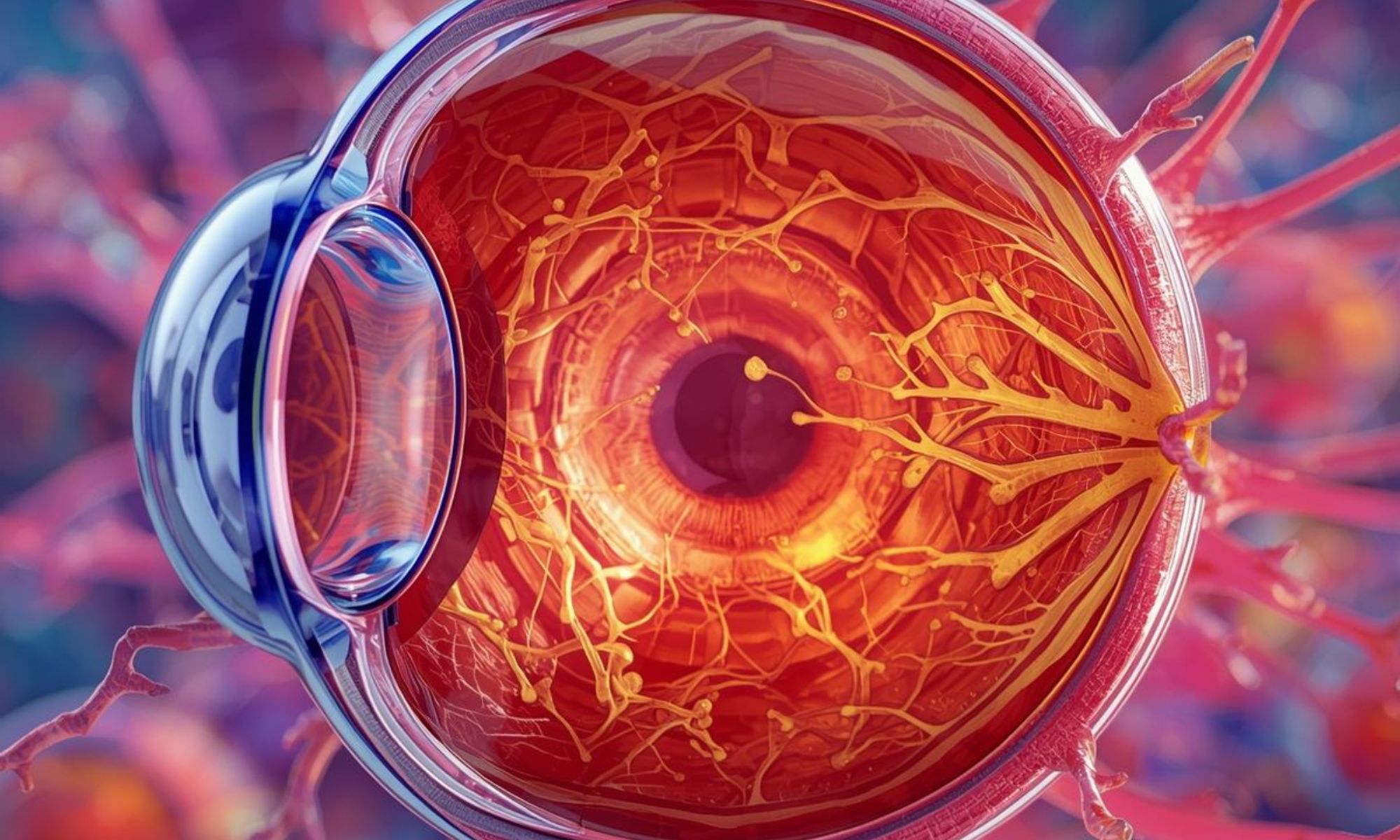
Precise Bio has reported the first successful human implantation of its 3D-printed cornea implant, constructed of functional human eye cells cultured in a laboratory. The company described the procedure as the world’s first — and a major milestone toward its goal of alleviating the long wait times for people seeking transplants and faced with a lack of available donor tissue.
According to North Carolina-based company Precise Bio, there is currently only one available cornea for every 70 patients who need one to see. This robotic bio-fabrication approach could potentially turn a single donated cornea into hundreds of lab-grown grafts. “This achievement marks a turning point for regenerative ophthalmology — a moment of real hope for millions living with corneal blindness,” Aryeh Batt, Precise Bio’s co-founder and CEO, said in a statement.
3. BiommoH: The largest dataset of human biology-based models launched
The company FRESCI, mandated by the Joint Research Centre (JRC) compiled a Biomedical models Hub (BimmoH), the first and largest public database continuously updated with highly curated articles on human biology-based experimental models, powered by interpretable AI/ML models, designed to structure and consolidate information about models that support biomedical research.
By consolidating information on models that rely on human biology, such as organ-on-a-chip systems, 3D cell cultures or computational models, BimmoH offers researchers a powerful tool to design more relevant studies and increase biomedical research translatability. This dataset is a milestone in the EU’s push for more human-centric science, aligning with the Strategy for European Life Sciences, which emphasises innovation in biotechnology while reducing animal testing.
4. Advancing NAMs in food and feed safety: QSAR Lab leads new EFSA Project
From its first European Chemicals Agency (ECHA) contract on nanospecific NAMs, which led to the creation of NAMs.Network, through their current work with ECHA on NAMs and the development of an efficient regulatory framework that enables safe innovation in nanotechnology, NAMs have become a key part of QSAR Lab’s regulatory journey.
QSAR Lab is now pleased to share that it has been selected as the leading partner of a new project with the European Food Safety Authority (EFSA). For the next 2 years, QSAR Lab team will work on practical recommendations for integrating NAMs data into EFSA risk assessments for food and feed, making better use of in silico, in chemico, and in vitro methods, and promoting the 3Rs by reducing the need for new animal testing.
TOOLS, PLATFORMS, CALLS
5. TOXBOX: A flexible, all-in-one platform for comprehensive chemical toxicity testing
The Safe and Sustainable by Design approach requires an entire life cycle monitoring of the toxicity of chemicals. TOXBOX aspires to bring forth an instrument that will provide reliable toxicity data in relevant conditions for each chemical. The device will be based on a prototype developed in a H2020 project, PANBioRA, with a flexible microfluidic and instrument architecture to provide a plug and play testing platform to ease accessibility and interlaboratory validation. Progressive in silico models for long term effects will be iteratively developed.
For this project, the CEA-Leti’s is contributing notably by providing standardized microfluidic chips, a modular Fluidic Circuit Board for easy plug-and-play testing, and improved electrochemical sensors for real-time toxicity monitoring. A key milestone was just reached: CEA-Leti’s first microfluidic chips have been validated by partners, with promising early tests.
Read the announcement by CEA-Leti
INDUSTRY, BIOTECH & PARTNERSHIPS
6. Open-Source pharmacology framework for AI drug discovery by Ginkgo Bioworks
Ginkgo Bioworks has introduced the Virtual Cell Pharmacology Initiative (VCPI) through its Ginkgo Datapoints division, creating what it describes as the first open-source pharmacological framework for virtual cell modeling. The effort aims to establish a standardized foundation for AI-based drug discovery by providing free, high-quality pharmacology data generation to researchers worldwide.
VCPI’s objective is to test at least 100,000 compounds and produce more than 12 billion pharmacological data points, forming a publicly accessible dataset optimized for virtual cell research. The project intends to fill a major gap in the field — lack of standardized, reproducible data that can be used to train predictive AI models of cellular behavior.
7. Humabiologics & AATB-accredited tissue banks transform donations for neural organoid research
As the scientific community utilizes more organoid-based research, the ethical conversation around the experiments using these organoids and the sourcing of these human cells is being put up for discussion.Leading scientists shared their thoughts on some of the growing and pressing ethical and social questions around human neural organoid and assembloid research. It is critical that these human cells are ethically sourced, but it must be ensured that all other components of human organoids are ethically sourced.
Every year, approximately 10,000 donated organs go unused, nearly 20% of all donations and are discarded as medical waste. Humabiologics has partnered with AATB-accredited tissue banks to transform these donations into industry-changing research materials, all through its FDA-registered facility; with the aim to provide ethically sourced human relevant biomaterials to help researchers conduct truly ethical and human research.
SCIENTIFIC DISCOVERIES & PROTOCOLS
8. Atomically accurate de novo design of antibodies
Despite the central role of antibodies in modern medicine, no method currently exists to design novel, epitope-specific antibodies entirely in silico. Instead, antibody discovery currently relies on immunization, random library screening or the isolation of antibodies directly from patients.
In a recent article, researchers demonstrate that combining computational protein design using a fine-tuned RFdiffusion network – an open source method for structure generation – with yeast display screening enables the de novo generation of antibodies that bind to user-specified epitopes with atomic-level precision.
This approach establishes a framework for the computational design, screening and characterization of fully de novo antibodies with atomic-level precision in both structure and epitope targeting.
Read the publication in Nature
- On the topic of drug-like antibody design, read the recent study by Chai Discovery. The researchers expanded the scope of de novo antibody design by applying the state-of-the-art Chai‑2 platform to design therapeutic antibodies in full-length monoclonal format across both conventional and challenging target classes.
9. Large-scale drug screening in SALS patient iPSC library
Heterogeneous and predominantly sporadic neurodegenerative diseases, such as amyotrophic lateral sclerosis (ALS), remain highly challenging to model. Patient-derived induced pluripotent stem cell (iPSC) technologies offer great promise for these diseases; however, large-scale studies demonstrating accelerated neurodegeneration in patients with sporadic disease are limited. A recent study generated an iPSC library from 100 patients with sporadic ALS (SALS) and conducted population-wide phenotypic screening.
Motor neurons derived from patients with SALS recapitulated key aspects of the disease. Screening of drugs previously tested in ALS clinical trials revealed that 97% failed to mitigate neurodegeneration, reflecting trial outcomes and validating the SALS model. Combinatorial testing of effective drugs identified baricitinib, memantine and riluzole as a promising therapeutic combination for SALS. These findings demonstrate that patient-derived iPSC models can recapitulate sporadic disease features, paving the way for a new generation of disease modeling and therapeutic discovery in ALS.
Read publication in Nature Neuroscience
10. Matrigel alternatives: An explorative study with HepaRG cells in animal-free hydrogels
Many in vitro NAM models still depend heavily on Matrigel and collagen despite the ethical, reproducibility, and biomedical concerns regarding the use of animal-derived materials. Several animal-free extracellular matrix hydrogel alternatives have emerged in the market. However, NAM studies with alternative hydrogels are rather scarce.
A recent paper published in Frontiers by authors Katharina Nitsche, Paul Carmichael, Sophie Malcomber, Iris Müller, and Hans Bouwmeester from Unilever Safety, Environmental and Regulatory Science (SERS) and Wageningen University & Research set out to see if new alternatives are truly ready to replace Matrigel. The hydrogels evaluated include PeptiMatrix Core and PuraMatrix as synthetic peptides, VitroGel Organoid‑3 as a synthetic polysaccharide, GrowDex as a wood-derived polysaccharide, and a Matrigel-collagen mix as the animal-derived reference. Each matrix was used to culture HepaRG cells in 96-well plates & with the MIMETAS OrganoPlate MPS device.
WORTH (RE)SHARING
EMA 3Rs Working Party (3RsWP) Biennial Report 2023 – 2024 has been published
an important milestone for advancing new approach methods across EU regulatory science
EUROoCS Digital Meeting Call – Organ-on-Chip Industry Edition II
a unique platform for industry experts to present their latest research and technological innovations. Deadline for applications: Dec. 31, 2025
NIH Replication Prize
Your ideas will help NIH determine areas of greatest need for replication studies and advance strategies to increase rigor and replicability of biomedical research Deadline to apply: Dec. 19, 2025.