

NAMs News
JUNE 15 - 19, 2026
NEWS, REPORTS & POSITION STATEMENTS
1. FDA accepts first in silico DDT under ISTAND program
FDA’s Center for Drug Evaluation and Research (CDER) has accepted the first Letter of Intent for an in silico drug development tool (DDT) into the Innovative Science and Technology Approaches for New Drugs (ISTAND) DDT Qualification Program. The DDT is an artificial intelligence (AI)-driven digital liver model for prediction of Drug-Induced Liver Injury (DILI). The model predictions will also aim to complement other methods of DILI risk assessment as part of a weight-of-evidence approach.
“New technologies are showing incredible promise in helping improve and streamline drug development, with the ultimate goal of enhancing patient care,” said Michael Davis, Acting Director of the CDER. “With this action, FDA is supporting innovative ways to optimize the development and evaluation of potential new therapies.”
Since publishing its roadmap in 2025, the FDA has successfully launched several key initiatives to replace animal testing with better alternatives. Read the FDA press release on its key first-year goals in the roadmap implementation
2. NIH launches new office to advance human-based research and reduce animal use
The National Institutes of Health (NIH) announced the creation of the Office of Research Innovation, Validation, and Application, or ORIVA, to speed the development and use of human-based research technologies across NIH. Housed in the Division of Program Coordination, Planning, and Strategic Initiatives (DPCPSI) in the NIH Office of the Director, ORIVA will take a two-pronged approach. One division will support innovations in the research community by developing new funding opportunities, research infrastructure, and training resources. The other will coordinate a multi-agency effort to facilitate the evaluation and acceptance of new research methods.
“Complex computational models, 3D human tissue models, and other emerging technologies have improved by leaps and bounds in recent years and may hold the key to a more effective research enterprise” said NIH Director Jay Bhattacharya. “The goal of ORIVA is to create systemic change, enacting a foundational shift across the scientific landscape that will translate to better human health” said Nicole Kleinstreuer, NIH Deputy Director for Program Coordination, Planning, and Strategic Initiatives.
3. ECHA updates its “Key Areas of Regulatory Challenge” report for 2026
The European Chemicals Agency (ECHA) has published the 2026 update of its “Key Areas of Regulatory Challenge” report, identifying priority research needs to support future chemicals regulation and strengthen the protection of human health and the environment. In line with the European Commission’s roadmap to phase out animal testing, the report highlights several scientific and regulatory challenges that must be addressed to enable greater reliance on non-animal approaches.
To support the transition away from animal testing, the report highlights research priorities including read-across, omics and NAMs (New Approach Methodologies) case studies; in vitro and in silico ADME and PBK models; alternative approaches for fish toxicity assessment; and non-animal strategies for carcinogenicity evaluation.
4. Advancing spatial multiomics for drug discovery: From promise to practice
Spatial multiomics is widely regarded as one of the most powerful additions to the modern drug discovery toolkit. It reveals not just potential therapeutic targets, but the neighborhoods where cells are activated, suppressed, and breakdown. Yet its translation into routine R&D and clinical workflows remains uneven.
That tension shaped a panel discussion at the NextGen Omics Spatial and Data conference in Boston, featuring leaders and researchers from Merck, Takeda, AstraZeneca, Georgia Tech, TALOX and Cornell University. As Alex Tamburino, director of spatial and single cell multiomics at Merck, noted, spatial technologies cannot be justified simply because they are powerful. “Spatial biology is incredibly high dimensional, but in discovery we still have to ask whether that complexity actually changes the decision we’re trying to make.”
Read the panel discussion takeaways by Drug Discovery Online
INTERVIEWS, NOMINATIONS & AWARDS
5. WORC.Community interview: Dr Tamas Korcsmaros on the development of the Imperial Organoid Facility
In this WORC.Community interview, Dr Tamas Korcsmaros, Associate Professor in Intestinal Epithelial Systems at Imperial College, discusses the development of the Imperial Organoid Facility, its recent acquisition of the MEPSGEN ProMEPS™ organ-on-chip platform, and the future of human-relevant biomedical research.
Tamas explains that the facility, launched three years ago after years of preparation, takes a disease- and tissue-agnostic approach to organoid research. Rather than focusing on a single organ system, it supports multiple organoid models and has established large-scale pipelines for collecting patient samples and creating patient-derived organoid models. A major focus has been building the infrastructure needed to make organoid research scalable and impactful.
6. ZonMw: Celebrating scientific excellence with 6 transnational ValNAM projects awarded
ZonMw announced the funding results of the joint German-Dutch call “ValNAM: Closing the gap – Validating and implementing new approach methodologies in a regulatory context”. In its announcement, ZonMw highlighted that the response to this call was exceptional, reflecting the vast innovation and dedication within the scientific communities, with 38 high-quality project proposals submitted by collaborative consortia. The selection followed a rigorous peer-review process by an international panel.
The 6 awarded projects will focus specifically on bridging the gap of a mainstream regulatory acceptance – moving methods up the Technology Readiness Levels (TRLs) and working closely with regulators to ensure these innovations become established standards for chemical safety and pharmaceutical efficacy.
7. Johns Hopkins announces major new investment in cutting-edge life sciences research
Johns Hopkins University will invest $80 million annually for each of the next two years in groundbreaking basic and applied research across a vast array of life science disciplines – from immunology to neuroscience, oncology to epidemiology, bioengineering to population health. The launch of the Life Sciences Research Initiative – made possible by generous support from more than 120 alumni and friends via the university’s Research Saves Lives effort – comes as Johns Hopkins and its research enterprise contend with challenges related to significant declines in federal research funding.
While the initiative is not specifically dedicated to NAMs or human-based methods, its focus on innovative, high-impact life sciences research and translational approaches could provide opportunities for projects leveraging human-relevant data, advanced in vitro models, computational tools and population-based research to improve human health.
TOOLS, PLATFORMS, CALLS
8. Fewer animal experiments thanks to virtual mouse
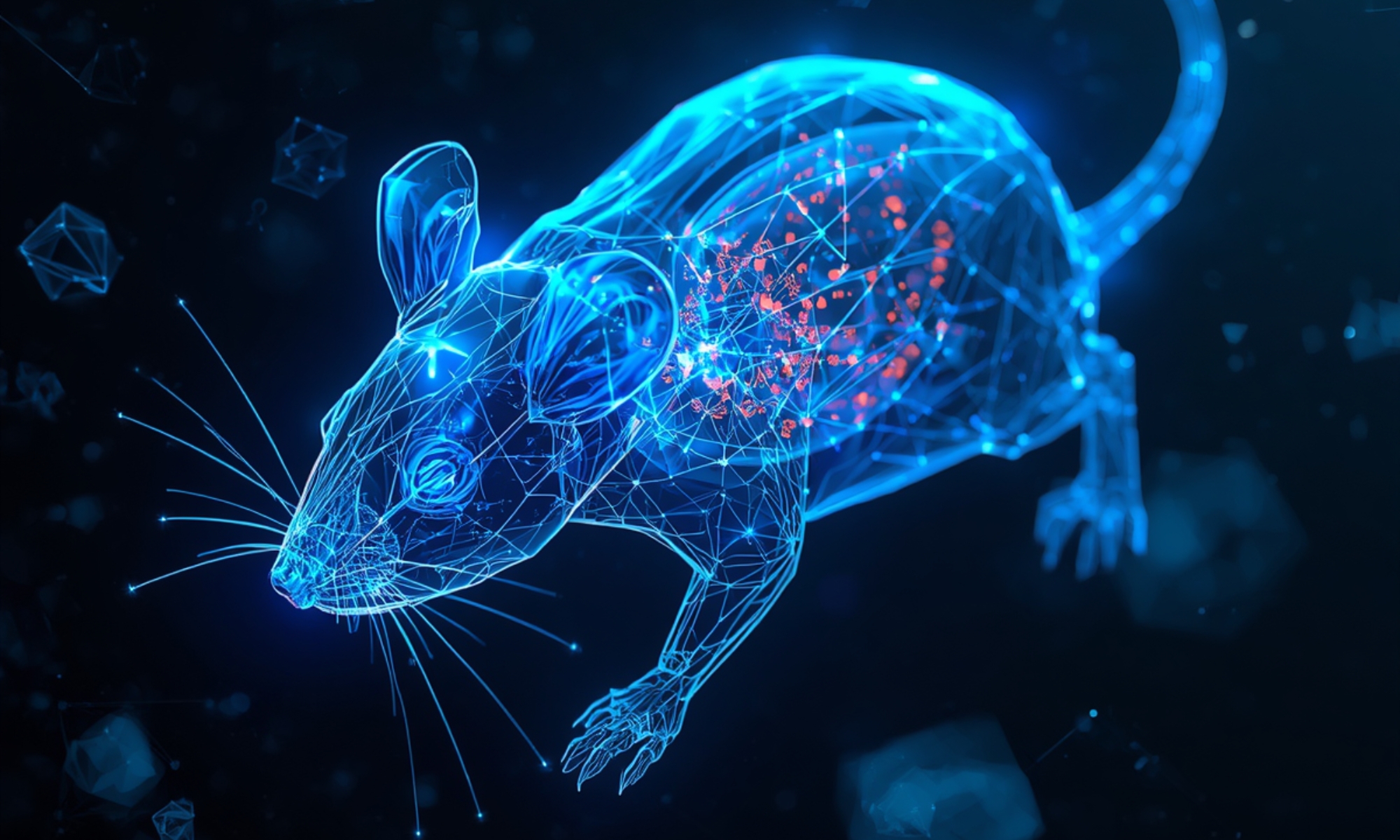
Jimeng Wu, a doctoral student in Empa’s Nanomaterials in Health and Technology and Society labs, has developed a virtual mouse that uses AI and machine learning to predict how different nanomaterials are distributed in the mouse organism in a much more time-efficient manner than in vivo. Wu based this so-called physiologically based pharmacokinetic model (PBPK model) on 18 mouse studies.
Compared to a traditional PBPK model, which is calibrated for a single substance at a time, Wu’s AI mouse has a decisive advantage: “The model can adapt its parameters to the measurable properties of the respective nanoparticle” explains Jimeng Wu. Jimeng Wu’s future research will also focus on a ‘bridge strategy’ to transfer the principle of her in silico model to human research. To this end, she plans to embed the principles of the virtual mouse in a human PBPK model.

To see more calls: Check out our calls interface
INDUSTRY, BIOTECH & PARTNERSHIPS
9. IMU Biosciences measures over 100 million immune data points using multi-omic analysis and proprietary machine learning
IMU Biosciences, a biotechnology company decoding the immune system to pioneer a paradigm shift in how we understand, diagnose and treat disease, has successfully brought its Series A to over $53 million in an oversubscribed financing round, co-led by IQ Capital and Molten Ventures, and supported by The British Business Bank and Meltwind alongside existing investors.
By combining high-fidelity multi-omic analysis with proprietary machine learning analytics, IMU can use a simple blood sample to measure over 100 million immune data points, creating the most detailed immune picture ever assembled at clinical scale. With its data, the Company is establishing a universal standard for immune profiling which will enable the discovery of new immune mechanisms and identify precision approaches, monitor disease progression and the course of treatment, and predict treatment suitability and efficacy for individual patients.
10. DiPS: The first professional society for digital preclinical science
The newly established Digital Preclinical Society (DiPS) aims to create a dedicated professional community focused on the generation, integration and regulatory use of digital preclinical evidence across animal-based, non-animal and in silico approaches. Founded by Stefano Gaburro and Szczepan Baran, the society seeks to address one of the most persistent challenges in drug development: the poor translation of preclinical findings into clinical success.
“That is what the Digital Preclinical Society is built to fill. Modality-neutral by design. Application before technology. Regulator-proximate from day one. User-governed, not vendor-driven. It does not compete with CDISC, Pistoia, VICT3R, DIVA, or DiMe. It sits above them, where the only question that matters is whether a body of evidence supports a decision a regulator can audit”, declared Stefano Gaburro in a recent post. DiPS owns the application layer: how digital approaches are selected, supported by fit-for-purpose evidence, integrated, interpreted, and used to improve specific preclinical decisions.
SCIENTIFIC DISCOVERIES & PROTOCOLS
11. A human corticospinal organoid-slice connectoid model informs enhancer strategies for post-injury axon regrowth
Axon elongation in the mammalian central nervous system (CNS) declines during development, limiting regenerative capacity after birth. Intrinsic regulators of this process are promising repair targets, as immature axons can regrow in tissues otherwise not conducive to regeneration. Yet the precise timing and mechanisms underlying the cessation of axon growth in the human CNS remain unresolved.
Cambridge scientists developed a 3D human corticospinal motor organoid-slice connectoid platform mimicking the developmental axon elongation program and its subsequent restriction through maturation. Using single-cell transcriptomics, computational analyses, axon regrowth assays, and live imaging, they identified transcriptional alterations contributing to decreased axon growth in maturing human cortical projection neurons. The researchers further demonstrate that this decline can be reversed using compounds and repurposable drugs targeting a maturation-associated transcriptional shift, promoting post-injury axon repair.
Read the press release by Cambridge University
Read the article published in Cell Reports
12. Human organoids: Fit for drug discovery?
Organoids are self-organizing 3D in vitro tissues derived from pluripotent stem cells (PSCs) that recapitulate key structural and functional features of human organs. Their multicellular architecture and physiological relevance make them promising NAMs for disease modeling, drug discovery, and toxicity testing. However, their reliability and scalability for compound screening remain under evaluation.
A new review summarizes current human PSC-derived organoid screening strategies, highlighting available readouts, related machine learning methods, and their potential advantages over traditional screening models. Ole Pless, du Fraunhofer Institute for Translational Medicine and Pharmacology ITMP, et al. also discussed major challenges, including assay robustness, throughput limitations, and the need for standardized protocols. Advancing validated and scalable approaches will be essential for integrating organoids into pharmaceutical development and improving the translational success of drug candidates.
Read the article in Stem Cell Reports
13. Integrating static and dynamic human in vitro gut-models for pesticide risk assessment
From a toxicological regulatory perspective, conducting human next-generation risk assessments (NGRA) of agrochemicals necessitates the adoption of the 3Rs framework. In a new study, researchers successfully implemented a human static in vitro gut-model, based on Caco‑2 / HT29-MTX co-cultures, and adapted it into a microphysiological dynamic organ-on-a-chip system to assess human intestinal exposure characteristics.
The results from static and dynamic studies demonstrated compound-specific concordance with available toxicokinetic in vivo data, supporting exploratory applicability for selected pesticides, paving the way for future research on organ interactions, particularly gut-liver integration to better model enterohepatic circulation of pesticides and their metabolic fate.
Read the article in the NAM Journal
14. Designing complex organoids through developmental principles
Principles of developmental biology have inspired efforts for directed differentiation of human pluripotent stem cells (hPSCs), leading to the first generation of organoids that are now well established as models of human development and disease. However, first-generation organoid models were missing many cell types that would be needed to study normal and pathological processes.
In a recent article, Jonathan A. Brassard and James M. Wells, researchers at the Cincinnati Children’s Hospital Medical Center, discussed how designing next-generation organoids with increased cellular complexity has been possible by better reproducing developmental processes in play during organogenesis in vivo. They focus on recent conceptual and technical advances in reconstructing appropriate cellular diversity in organoids, dissecting the importance of tissue-tissue interactions and specialized cell addition, and how engineering technologies can further enhance our ability to control how cells are brought together to mimic human development in vitro.
Read the article in Cell Stem Cell
WORTH (RE)SHARING
“New developments and applications of human organoids” – A review by Amanda Andersson-Rolf (Karolinska Institutet) and Hans Clevers (Hubrecht Institute), published in Nature Reviews Molecular Cell Biology
“Establishing scientific confidence: Human biological relevance of reconstructed human respiratory epithelium” – Review article published in Frontiers in Toxicology
Dr. Tyler Wenzel and Dr. Neeraj Dhar, USask medical researchers, earned prestigious Stem Cell Network honours in Canada
“NAMs Are Not a Shortcut — They Are a Better Decision Tool” – Perspective by Yvonne Will, (ATS Fellow) and Karl-Rudolf Erlemann (KreaMedica Inc.)
ZonMw report on the “Accelerating Global Transition Towards Animal-Free Research and Innovation” stakeholder meeting, held on 13 May by the three consortia AFARA, SAFE and Valuing Testing
WHO document “Recommendations for the preparation, characterization, establishment and use of WHO international biological reference standards” formally adopted
UPCOMING WEBINARS, WORKSHOPS, SYMPOSIA
2026 EUROoCS Annual Meeting – June 22 – 24, 2026 – Braga (Portugal)
Stem Cell Summer School Radboudumc – June 22 – 26, 2026 – Nijmegen (The Netherlands)
Complex Organoid Systems with Multifaceted InteraCtions Symposium – June 23 – 24, 2026 – Montpellier (France)
NAMs Live Talks Series — Session 5: Advancing Women’s Health Through NAMs – June 24, 3pm (CET) – Online